

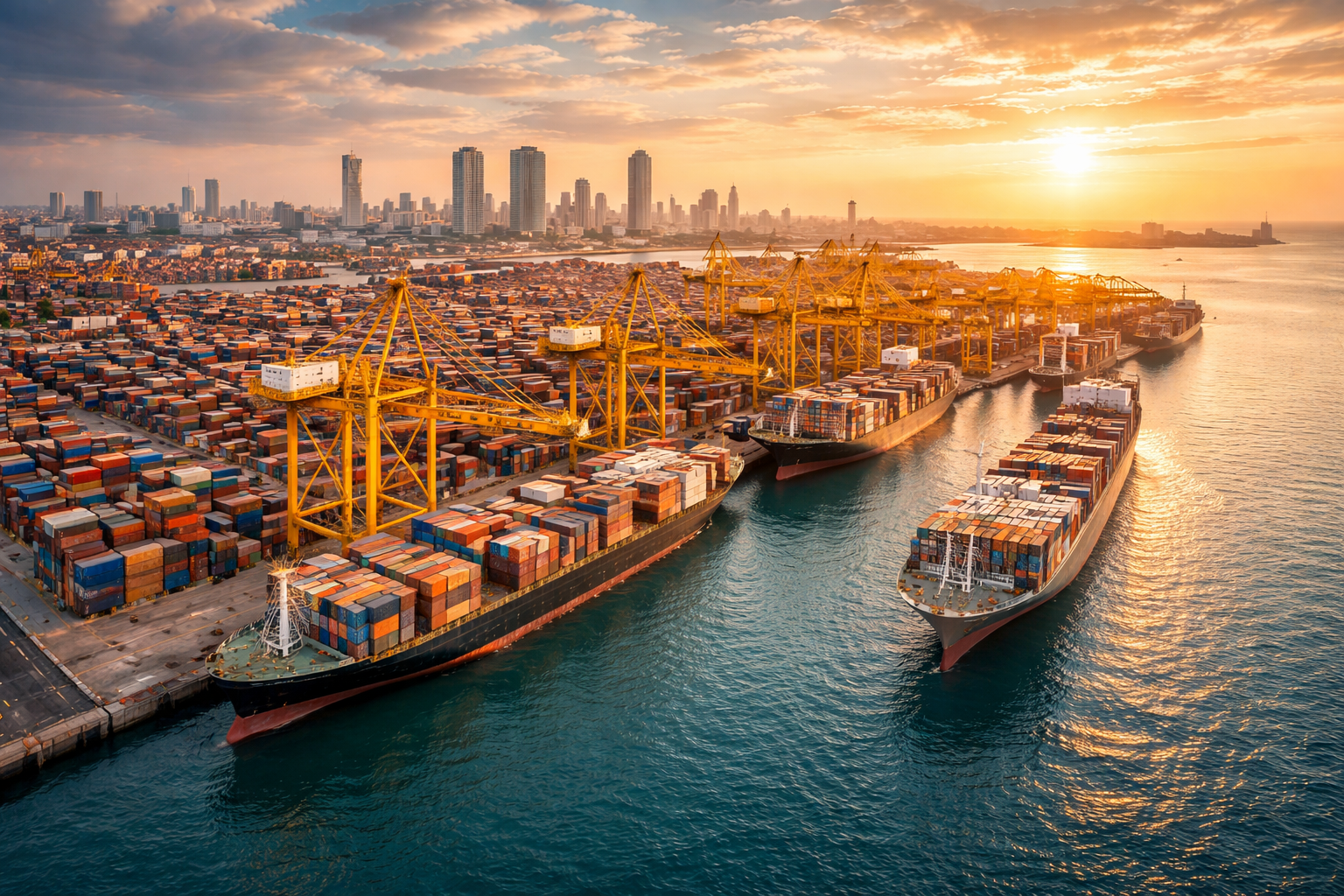
Sri Lanka's position as a strategically located island nation in the Indian Ocean has long made it a significant player in global trade. With the Port of Colombo ranking among South Asia's busiest container terminals and a growing export economy spanning garments, tea, rubber, spices, and electronics, the demand for reliable, professional freight forwarding in Sri Lanka has never been greater. Whether you are importing raw materials for your factory or exporting finished goods to international buyers, understanding how freight forwarding works in Sri Lanka is essential to keeping your supply chain efficient, compliant, and cost-effective.
This complete guide covers everything importers and exporters need to know - from how freight forwarding works to customs procedures, documentation, costs, and how to choose the right logistics partner.
Freight forwarding is the coordination and management of goods shipments on behalf of importers and exporters. A freight forwarder does not typically own the ships, planes, or trucks that carry your cargo - instead, they act as a specialist intermediary, organising the most efficient and cost-effective combination of transport, customs clearance, documentation, warehousing, and delivery to move your goods from origin to final destination.
In Sri Lanka, freight forwarding plays a particularly critical role because of the country's dependence on both imports - including fuel, machinery, vehicles, and consumer goods - and exports - primarily garments, tea, rubber products, coconut-based goods, and gems. Managing the logistics of these trade flows requires deep knowledge of Sri Lanka Customs regulations, port procedures at Colombo, and international shipping routes.
Fletching Logistics brings together the expertise, carrier relationships, and local knowledge needed to navigate Sri Lanka's import and export landscape efficiently and professionally.
Understanding the freight forwarding process from start to finish helps importers and exporters plan more effectively and avoid costly surprises.
Step 1 - Shipment Planning and Quotation
The process begins with your freight forwarder understanding your shipment requirements - commodity type, weight, dimensions, origin, destination, and delivery deadline. They then identify the most suitable routing, mode of transport (sea, air, or road), and carrier, and provide you with a comprehensive quotation covering all charges.
Step 2 - Booking and Documentation Preparation
Once you confirm the booking, your forwarder arranges the carrier reservation and guides you through the documentation required. For exports from Sri Lanka, this typically includes the commercial invoice, packing list, bill of lading or airway bill, certificate of origin, and any commodity-specific certificates such as phytosanitary certificates for agricultural goods.
Step 3 - Cargo Collection and Stuffing
Your freight forwarder arranges collection of cargo from your premises or factory and coordinates transportation to the port or airport. For sea freight, cargo is stuffed into containers either at your facility (FCL) or at a consolidation depot (LCL).
Step 4 - Sri Lanka Customs Export Declaration
All exports from Sri Lanka require a Customs Export Entry to be submitted through the ASYCUDA World system used by Sri Lanka Customs. Your freight forwarder or their licensed customs broker handles this declaration, ensuring accurate commodity codes, declared values, and compliance with any export licensing requirements.
Step 5 - Port Handling and Vessel/Flight Departure
Your cargo is delivered to the Colombo Port or Bandaranaike International Airport and processed through terminal handling. Your forwarder monitors the cargo through to loading confirmation and provides you with the bill of lading or airway bill once the vessel or flight departs.
Step 6 - Transit and Tracking
During transit, your forwarder provides tracking updates and manages any issues that arise - such as transshipment delays or documentation queries at intermediate ports.
Step 7 - Destination Customs Clearance and Delivery
At the destination country, your forwarder's partner agent or in-house team manages import customs clearance and arranges final delivery to the consignee's address. For imports into Sri Lanka, this process is handled at Colombo Port or the airport, with duties and taxes assessed by Sri Lanka Customs before cargo is released.
Step 8 - Invoice and Documentation Handover
Once delivery is complete, your forwarder issues a final invoice covering all charges and provides you with a complete set of shipping documents for your records.
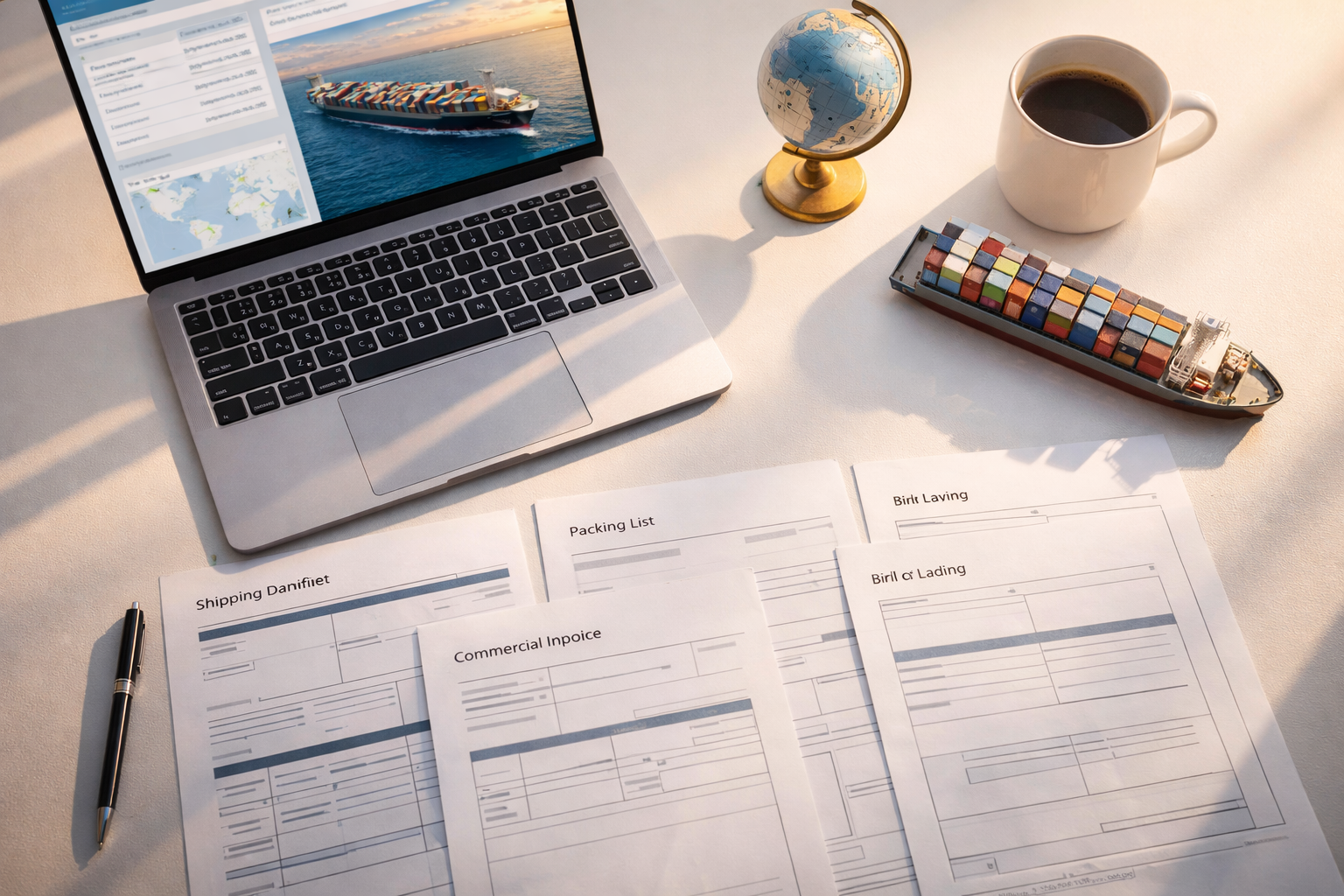
Sri Lanka Customs operates under the Customs Ordinance and is responsible for controlling the movement of all goods into and out of the country. Here are the key points every importer and exporter in Sri Lanka should understand.
Import Duties and Taxes
Imports into Sri Lanka are subject to customs duty, value added tax (VAT), excise duty (on applicable goods), ports and airports development levy (PAL), and social security contribution levy (SSCL). The applicable rates depend on the HS code of the commodity. A professional freight forwarder will calculate the estimated duty liability before your shipment arrives, allowing you to plan your cash flow.
ASYCUDA World System
Sri Lanka Customs uses the ASYCUDA World electronic system for processing import and export declarations. All entries must be submitted electronically, and errors in commodity classification or valuation can trigger examinations, delays, and penalties. Experienced freight forwarders with licensed customs brokers handle this process accurately on your behalf.
Import and Export Licenses
Certain categories of goods require import or export licenses from relevant government authorities in Sri Lanka. These include pharmaceuticals, chemicals, food items, agricultural products, and some industrial goods. Your freight forwarder should identify any licensing requirements before shipment to avoid delays at customs.
Prohibited and Restricted Goods
Sri Lanka maintains a list of prohibited and restricted imports and exports. Prohibited goods cannot be imported or exported under any circumstances. Restricted goods require specific permits or meet defined conditions. Your forwarder should screen your commodity against these lists before arranging shipment.
Sea Freight via Colombo Port
The Port of Colombo is Sri Lanka's primary gateway for sea freight and one of the most significant transshipment hubs in Asia. Regular direct and transshipment services connect Colombo to major ports in Europe, Asia, the Middle East, and beyond. Transit times to major European ports range from 20-28 days, while destinations in Southeast Asia can be reached in 7-14 days.
Air Freight via Bandaranaike International Airport
For time-sensitive, high-value, or perishable cargo, air freight through Colombo's Bandaranaike International Airport offers significantly faster transit. Europe-bound air freight typically takes 2-5 days. Air freight costs are considerably higher than sea freight but are justified for urgent or premium shipments.
Road Freight for Regional Connectivity
Road transport plays a vital role within Sri Lanka for moving cargo between factories, warehouses, consolidation depots, and ports. For businesses with operations across the island, reliable road freight partnerships are essential to keeping the domestic leg of the supply chain running smoothly.
Look for a freight forwarder with membership in recognised industry bodies, a proven track record with Sri Lanka Customs, strong carrier relationships, and transparent pricing. Client testimonials and experience in your specific commodity or trade lane are strong indicators of reliability.
Standard export documentation from Sri Lanka typically includes the commercial invoice, packing list, bill of lading or airway bill, certificate of origin (issued by the Ceylon Chamber of Commerce or relevant authority), customs export entry, and any commodity-specific certificates required by the destination country.
Freight forwarding costs depend on the mode of transport, route, cargo volume and weight, customs complexity, and additional services required. Sea freight LCL shipments from Colombo to European destinations typically start from around USD 150-400 per cubic metre. Always request a detailed, itemised quote that covers all charges including customs, terminal handling, and delivery.
Sea freight from Colombo to major Northern European ports such as Felixstowe, Rotterdam, or Hamburg typically takes 20–28 days depending on the service and routing. Direct services are faster than those requiring transshipment at intermediate hubs.
Absolutely. LCL (Less than Container Load) sea freight and groupage road freight options make professional freight forwarding accessible and cost-effective for small and medium-sized businesses in Sri Lanka, even for relatively modest shipment volumes.
A licensed customs broker is authorised to submit import and export declarations to Sri Lanka Customs on behalf of importers and exporters. Many freight forwarders either employ in-house customs brokers or work with established partners, providing a seamless one-stop service for both freight and customs.
Yes. Sri Lanka has free trade agreements with India and Pakistan, and is engaged in discussions with several other trading partners. These agreements can affect applicable duty rates on qualifying goods. Your freight forwarder should advise on preferential tariff eligibility based on your commodity and its origin.
Q: Do I need a freight forwarder or can I handle shipping myself?
While it is technically possible to arrange shipping independently, the complexity of Sri Lanka Customs procedures, carrier negotiations, documentation requirements, and international regulations makes professional freight forwarding a highly practical and cost-effective choice for most businesses.
Q: What is the difference between FCL and LCL shipping from Sri Lanka?
FCL (Full Container Load) means your cargo fills an entire container exclusively. LCL (Less than Container Load) means your cargo shares a container with other shippers' goods and you pay only for the space you use. LCL is ideal for smaller shipment volumes, while FCL is more cost-effective once your cargo fills roughly 60-70% of a container.
Q: How are import duties calculated in Sri Lanka?
Import duties in Sri Lanka are calculated on the customs value of the goods, which is based on the CIF (Cost, Insurance, and Freight) value - meaning the cost of goods plus international freight and insurance. Multiple taxes are then applied on top including customs duty, VAT, PAL, and SSCL depending on the commodity.
Q: Can a freight forwarder help with warehousing in Sri Lanka?
Yes. Many freight forwarders in Sri Lanka offer complementary warehousing, consolidation, and distribution services. This is particularly useful for importers who need to store goods before distributing them across the island.
Q: What happens if my cargo is held by Sri Lanka Customs?
Cargo can be held for examination, additional documentation, or duty payment. A freight forwarder with experienced customs brokers can intervene promptly, provide the required information, and facilitate release to minimise delays and storage charges.
Q: Is cargo insurance necessary for shipments to and from Sri Lanka?
It is not legally required but is strongly recommended. Given the value of most commercial cargo and the risks involved in international transit - including damage, theft, and weather - comprehensive cargo insurance provides essential financial protection.
Q: How do I get started with freight forwarding for my Sri Lankan business?
Contact a reputable freight forwarding company, describe your shipment requirements, and request a detailed quote. The team at Fletching Logistics is experienced in supporting Sri Lankan importers and exporters with professional, end-to-end freight solutions.
Not all freight forwarders are equal. When evaluating providers for your Sri Lankan import or export needs, consider the following:
Experience with your commodity and trade lane matters enormously. A forwarder familiar with garment exports or tea shipments will navigate the specific documentation and certification requirements far more efficiently than a generalist provider.
Local customs knowledge is non-negotiable. Sri Lanka Customs procedures are nuanced and regularly updated. A forwarder with experienced, licensed customs brokers on their team prevents costly errors and delays.
Carrier relationships determine your access to competitive rates and reliable sailing schedules. Established forwarders with strong carrier partnerships provide better options and pricing than those with limited networks.
Communication and transparency set the best providers apart. You should always know where your cargo is, what it is costing, and who to contact if something needs attention.
Fletching Logistics understands the unique dynamics of freight forwarding in Sri Lanka - from the procedural intricacies of Sri Lanka Customs to the routing options available through Colombo Port and Bandaranaike International Airport. Our team delivers professional, end-to-end freight solutions that give Sri Lankan importers and exporters the reliability, cost efficiency, and peace of mind they need to compete effectively in global markets.
Whether you are new to international trade or looking to improve your existing logistics arrangements, professional freight forwarding in Sri Lanka is the foundation of a resilient, efficient supply chain.
Contact Fletching Logistics today to speak with a freight specialist who understands Sri Lanka's trade environment inside and out. Let us handle the complexity so you can focus on growing your business.
This article is intended for general informational purposes. Import duties, customs regulations, and shipping rates are subject to change. Always consult a licensed freight forwarding professional for advice specific to your shipment.