

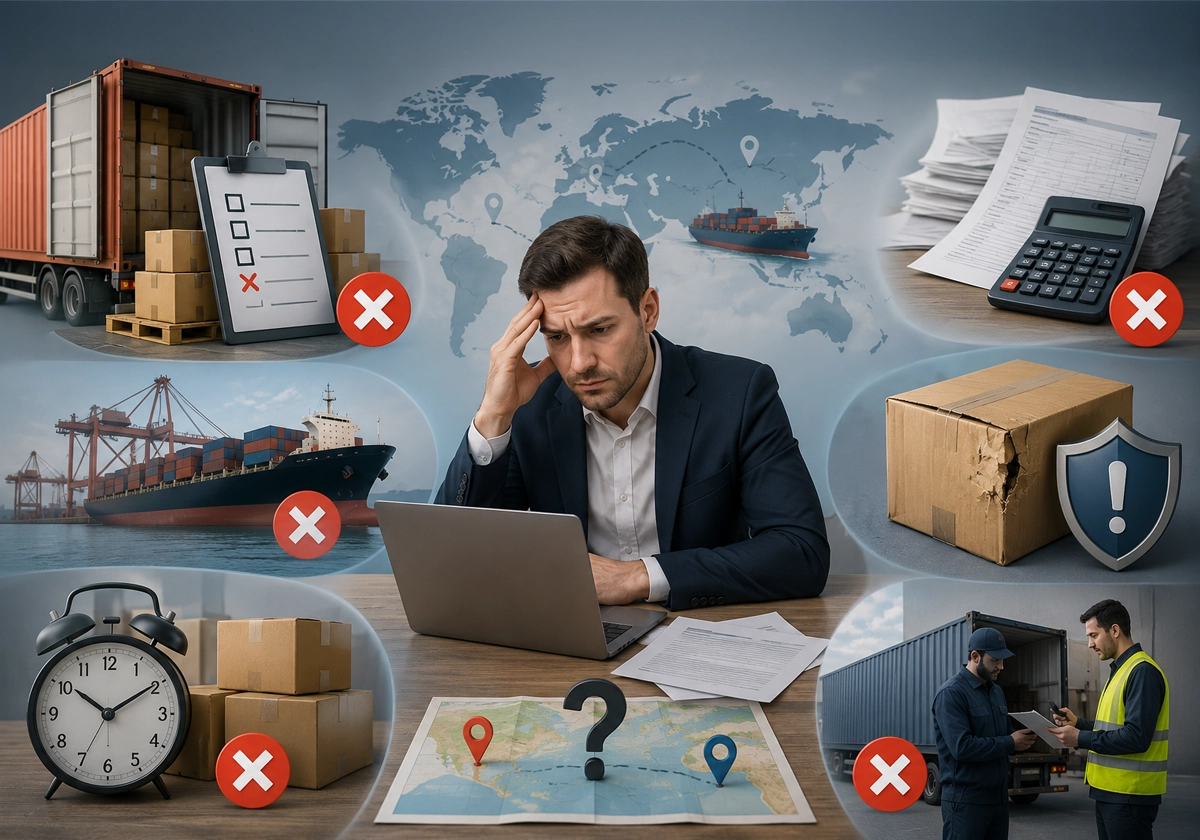
Freight forwarding plays a major role in modern supply chain management. Businesses that rely on imports, exports, manufacturing, retail distribution, or local transportation depend heavily on smooth logistics operations. However, even small errors in logistics planning can lead to delays, damaged cargo, increased costs, and customer dissatisfaction.
Many companies unknowingly make critical Freight Forwarding Mistakes that negatively impact their operations and profitability. From choosing the wrong logistics partner to poor documentation management, these mistakes can disrupt the entire supply chain.
In this guide, we explain the most common freight forwarding mistakes businesses should avoid, how to improve logistics efficiency, and what companies can do to build stronger transportation operations.
Freight forwarding involves organizing and managing the transportation of goods from one location to another through road, sea, or air transport.
Freight forwarders coordinate:
Professional freight forwarding companies help businesses simplify logistics operations while reducing risks and transportation delays.
Businesses that use reliable Freight Forwarding Mistakes prevention strategies often achieve better operational efficiency and customer satisfaction.
Logistics problems can quickly become expensive for businesses.
Common consequences of freight forwarding mistakes include:
Avoiding these mistakes helps businesses improve supply chain performance and maintain reliable operations.
One of the biggest mistakes businesses make is selecting a freight forwarding company based only on low pricing.
While reducing costs is important, extremely cheap logistics services may result in:
A reliable logistics partner should offer a balance between affordability, service quality, and operational reliability.
Experienced companies like Fletching Logistics focus on efficient transportation solutions rather than simply competing on low pricing.
Incorrect or incomplete shipping documentation is a major cause of logistics delays.
Common documentation mistakes include:
These issues can lead to customs delays, penalties, and shipment holds.
Businesses should always verify documentation carefully before shipment processing.
Customs regulations vary depending on cargo type, destination, and import/export rules.
Businesses that ignore customs compliance may face:
Working with experienced freight forwarders helps businesses navigate customs procedures more efficiently.
Many businesses fail to monitor cargo movement properly.
Without tracking systems, companies may struggle with:
Modern freight forwarding companies use technology to provide real-time shipment tracking and updates.
Improper packaging increases the risk of cargo damage during transportation.
Common packaging mistakes include:
Businesses should use packaging methods suitable for the cargo type and transportation mode.
Unexpected logistics disruptions can occur due to:
Businesses that fail to build contingency plans into their logistics operations may experience major operational disruptions.
Good logistics planning includes backup strategies and realistic delivery timelines.
Communication problems between businesses and freight forwarders often create unnecessary confusion.
Common communication issues include:
Strong communication helps improve coordination and operational efficiency.
Different cargo types require different transportation solutions.
Some businesses make the mistake of selecting transport options based solely on speed or cost without considering:
An experienced freight forwarder can recommend the most suitable transportation solution.
Some businesses underestimate the importance of cargo insurance.
Without proper coverage, companies may face major financial losses from:
Cargo insurance helps protect businesses against transportation risks.
Switching freight forwarders frequently can reduce operational consistency.
Long-term partnerships help businesses benefit from:
Reliable freight forwarding relationships support long-term business growth.
Research logistics providers carefully.
Look for:
Before every shipment:
Accurate documentation reduces delays and compliance risks.
Choose packaging materials suitable for the cargo type and transportation conditions.
Fragile or sensitive goods may require:
Use tracking systems to monitor cargo movement and identify issues early.
Shipment visibility improves logistics planning and customer communication.
Keep regular communication with your freight forwarding partner regarding:
Strong communication prevents misunderstandings and delays.
Modern logistics technology improves supply chain management through:
Technology helps businesses reduce human error and improve transportation efficiency.
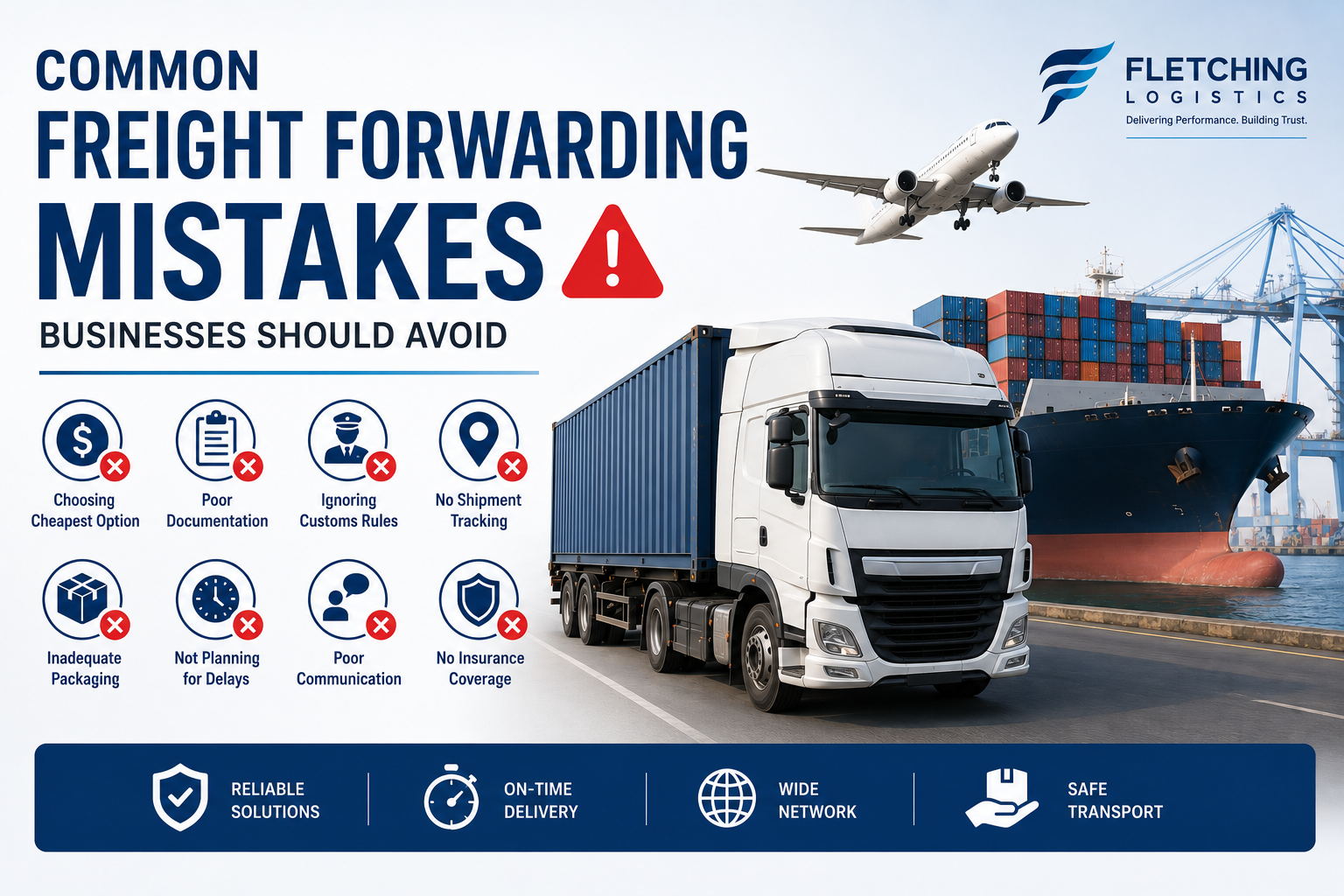
Common mistakes include poor documentation, choosing low-quality providers, inadequate packaging, lack of shipment tracking, and ignoring customs regulations.
Accurate documentation ensures customs compliance, prevents shipment delays, and reduces logistics errors.
Businesses can reduce risks through proper planning, experienced logistics partners, shipment tracking, and strong communication.
Tracking systems help businesses monitor shipments, detect delays early, and improve customer communication.
Incorrect documentation may result in shipment delays, penalties, inspections, or customs rejection.
Freight forwarders manage transportation coordination, customs handling, cargo movement, and logistics planning.
Proper packaging protects cargo from damage during transportation and handling.
Businesses can improve logistics performance by:
Efficient logistics operations improve customer satisfaction and operational reliability.
You may need a new logistics provider if you frequently experience:
Reliable freight forwarding companies provide transparency, operational support, and consistent delivery performance.
Professional logistics providers help businesses:
Strong logistics management supports long-term business success.
The logistics industry continues evolving with:
Businesses that adopt modern logistics solutions can improve competitiveness and operational efficiency.
Avoiding common Freight Forwarding Mistakes is essential for businesses that rely on transportation and supply chain operations. Small logistics errors can quickly become expensive problems that affect customer satisfaction and operational performance.
Businesses should focus on choosing experienced logistics providers, maintaining strong communication, verifying documentation, and using modern tracking technology to improve supply chain efficiency.
Reliable freight forwarding services help businesses reduce risks, improve transportation reliability, and support long-term growth.
For businesses looking to improve logistics performance and avoid costly transportation mistakes, contact Fletching Logistics to learn more about professional freight forwarding solutions tailored to your business needs.