


In today's interconnected world, moving goods across borders involves far more than simply booking a truck or a container ship. Customs regulations, documentation, carrier negotiations, insurance, and last-mile delivery all need to come together flawlessly - and one missed step can cost a business significantly in time, money, and client trust. This is exactly where professional cargo freight forwarders add measurable value. Whether you're a small business shipping for the first time or an established exporter looking to streamline operations, understanding what freight forwarders bring to the table can transform how you approach global logistics.
A cargo freight forwarder is a specialist logistics company that acts as an intermediary between a shipper and the various transportation services involved in moving goods from one country to another. They don't typically move the freight themselves - instead, they coordinate the entire supply chain on your behalf, leveraging established networks of carriers, customs agents, warehouses, and port handlers to move your cargo efficiently and cost-effectively.
Fletching Logistics is one such provider, offering comprehensive freight forwarding solutions designed to simplify global shipping for businesses of all sizes.
Freight forwarding is a highly specialised field. Professional forwarders understand the complexities of international trade regulations, tariff classifications, import and export restrictions, and documentation requirements across multiple countries. This expertise means fewer errors, faster clearance, and a significantly reduced risk of costly compliance penalties.
Rather than spending weeks learning the nuances of international shipping regulations yourself, you tap into a team that already has this knowledge - and keeps up with changes in trade law on your behalf.
One of the most practical benefits of working with professional cargo freight forwarders is their access to a wide network of shipping lines, airlines, road hauliers, and rail operators. Because they move high volumes of freight regularly, forwarders can negotiate rates that individual businesses simply cannot access on their own.
This means better pricing, more flexible scheduling, and access to carriers suited to your specific cargo - whether that's temperature-controlled goods, oversized machinery, or time-sensitive parcels.
Coordinating international freight involves multiple parties - origin agents, customs brokers, port terminals, ocean or air carriers, destination agents, and final delivery drivers. Managing all of these independently is time-consuming and prone to communication gaps.
A professional freight forwarder serves as a single point of contact throughout the entire journey. From pickup at your warehouse to delivery at the final destination, they oversee every stage and keep you informed at each milestone.
Customs is often the most intimidating part of international shipping for businesses new to global trade. Incorrect tariff codes, missing certificates of origin, or incomplete commercial invoices can result in shipments being held, fined, or returned.
Experienced cargo freight forwarders manage customs documentation on your behalf, ensuring accuracy and compliance with both the exporting and importing country's requirements. This dramatically reduces clearance delays and keeps your supply chain moving without unnecessary interruptions.
If you're not shipping full container loads (FCL), a freight forwarder can consolidate your cargo with other shippers' goods into a single container through a Less than Container Load (LCL) arrangement. You only pay for the space your goods occupy, making international shipping far more affordable for small and medium-sized businesses.
This consolidation service is a significant cost advantage that isn't available when booking freight independently.
International shipments are exposed to various risks including damage, theft, loss, and weather-related incidents. Most freight forwarders offer cargo insurance options that provide comprehensive coverage suited to the nature and value of your goods.
Beyond insurance, professional forwarders also apply proactive risk management - advising on proper packaging, choosing appropriate routing, and flagging potential hazards specific to your cargo type or destination.
Knowing where your shipment is at any given moment is no longer a luxury - it's a business necessity. Reputable cargo freight forwarders provide tracking tools and regular status updates so you always have visibility over your goods in transit.
This transparency allows you to plan your inventory management, inform customers of delivery timelines, and respond quickly if any delays arise during the journey.
Every hour your team spends chasing carriers, preparing shipping documents, or resolving customs queries is an hour not spent on growing your business. Outsourcing freight management to a professional forwarder frees up your internal resources significantly.
The time savings compound over multiple shipments, making freight forwarding not just a logistics decision, but a smart operational investment.
As your business grows, your shipping volumes and complexity will increase. A good freight forwarding partner scales with you - handling higher volumes, new trade lanes, and more complex supply chain requirements without you needing to build internal logistics infrastructure.
This flexibility is particularly valuable for businesses entering new international markets or managing seasonal demand spikes.
Understanding local regulations, port conditions, public holidays, and regional carrier reliability in destination countries is critical to successful international shipping. Experienced freight forwarders maintain on-the-ground relationships and local expertise across the markets they serve - knowledge that is difficult to replicate without years of operational experience in those regions.
If you've never worked with a freight forwarder before, here's a straightforward guide to getting started.
Step 1 - Define Your Shipping Needs
Identify what you're shipping, the weight and dimensions, origin and destination, required delivery timeline, and any special handling requirements such as hazardous materials or refrigeration.
Step 2 - Research Reputable Providers
Look for freight forwarders with experience in your trade lane, strong customer reviews, relevant industry memberships, and transparent pricing. Fletching Logistics, for example, specialises in road freight forwarding with a strong focus on reliability and client communication.
Step 3 - Request a Quote
Provide your shipment details and ask for a comprehensive quote covering freight charges, customs fees, insurance, and any surcharges. Compare a few providers, but prioritise experience and reliability over the lowest price alone.
Step 4 - Prepare Your Documentation
Your forwarder will guide you on what documents are needed - typically a commercial invoice, packing list, bill of lading or airway bill, and any required certificates. Accuracy here is critical to avoiding customs delays.
Step 5 - Book and Hand Over
Once you confirm your booking, the forwarder takes over coordination. Your cargo is collected, consolidated or loaded directly, and begins its journey with full tracking activated.
Step 6 - Monitor Progress
Use the tracking tools and communication channels provided by your forwarder to stay updated throughout transit. Flag any concerns early so they can be addressed without disrupting the shipment.
Step 7 - Receive Delivery and Review
Once your cargo arrives, review the condition and confirm delivery. Provide feedback to your forwarder on the experience - this helps build a working relationship that improves with every shipment.
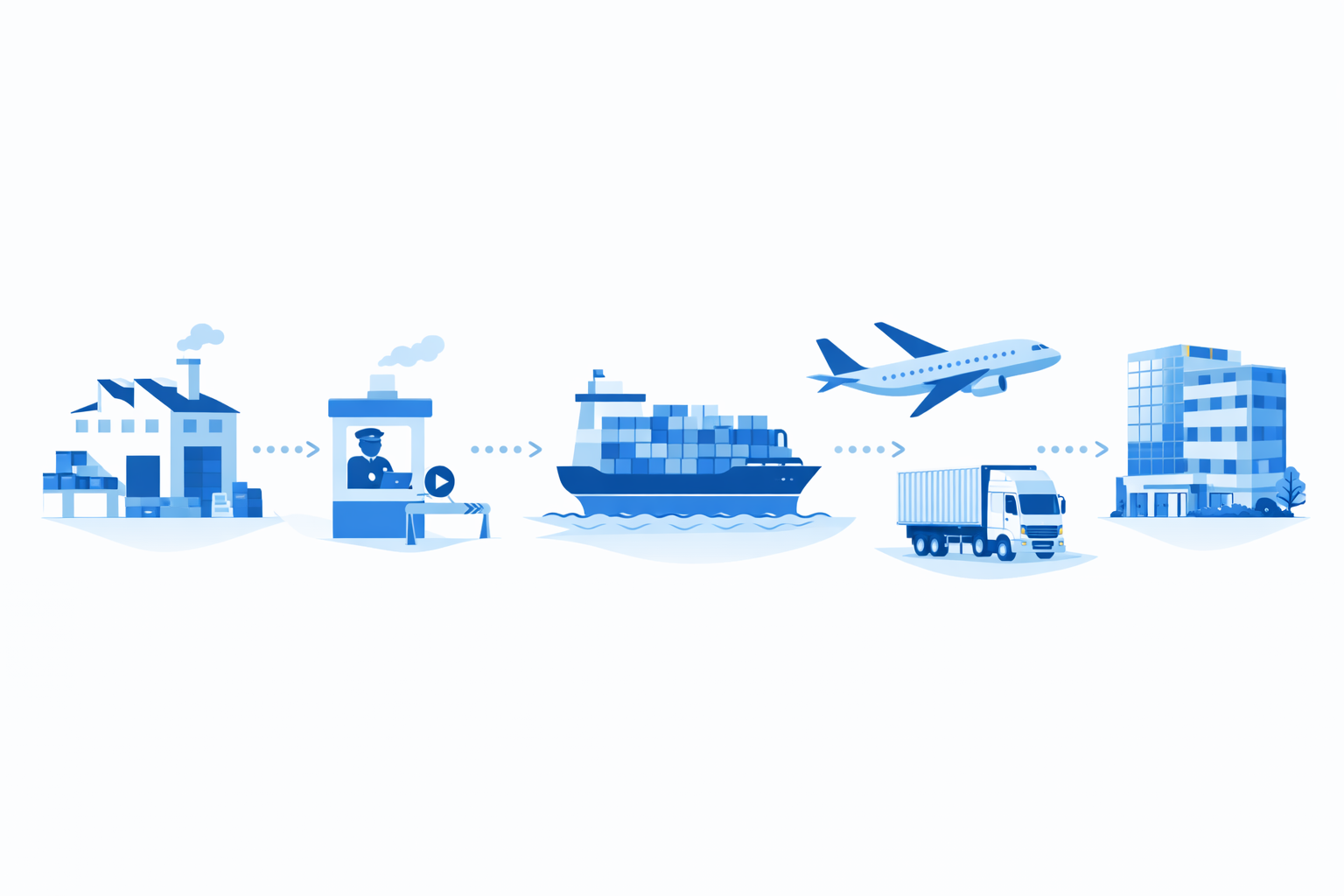
A freight forwarder plans and coordinates the movement of goods on your behalf, handling carrier booking, customs documentation, insurance, tracking, and communication between all parties in the supply chain.
Yes. Through LCL consolidation, forwarders make international shipping cost-effective even for smaller volumes. The expertise and time saved often outweigh the service fees for businesses of any size.
Freight forwarding costs vary depending on origin, destination, cargo type, weight, volume, and services required. Most forwarders provide itemised quotes covering freight, customs, handling, and insurance. It's always best to request a detailed quote directly.
Couriers handle smaller, lighter parcels with standardised services and fixed pricing. Freight forwarders manage larger commercial shipments with more complex routing, customs requirements, and documentation needs.
Many freight forwarders include customs brokerage as part of their service. Confirm with your provider whether customs clearance at origin and destination is included in your arrangement.
Transit times vary significantly by mode and route. Road freight within Europe can take 2-10 days. Sea freight between continents typically takes 15-40 days. Air freight is fastest at 2-7 days. Your forwarder can advise on the best option for your timeline and budget.
If you have cargo insurance through your forwarder, you can file a claim for the value of the damaged goods. Your forwarder will guide you through the claims process. Always document damage with photos upon receipt.
Yes, many can - but this requires specific certifications and compliance with international dangerous goods regulations (IMDG for sea, IATA for air). Confirm your forwarder's capability before booking hazardous cargo.
Q: How do I know if a freight forwarder is reliable?
Look for industry memberships (such as FIATA or BIFA), verifiable client testimonials, clear communication from the first enquiry, and transparent pricing. Experience in your specific trade lane is also a strong indicator of reliability.
Q: Should I use a local or international freight forwarder?
Both have their place. A local forwarder with international reach often offers the best of both worlds - local accessibility and a global network. Fletching Logistics operates with this model, combining local responsiveness with broad international capability.
Q: Can I switch freight forwarders mid-contract?
Generally yes, though check the terms of any service agreement. Most forwarders operate on a shipment-by-shipment or rolling basis without long-term lock-in.
Q: What information do I need to provide when getting a freight quote?
You'll typically need to provide origin and destination addresses, cargo dimensions and weight, commodity description, incoterms (e.g., EXW, FOB, CIF), and your required delivery date.
Q: Do freight forwarders offer warehousing services?
Many do. Warehousing, cross-docking, and distribution services are often available as add-ons, making a full-service forwarder a one-stop solution for your supply chain.
Q: What are Incoterms and why do they matter?
Incoterms are internationally recognised trade terms that define who is responsible for freight costs, insurance, and risk at each stage of the shipment. Your freight forwarder can explain which Incoterm is most appropriate for your transaction.
Choosing the right logistics partner is as important as choosing the right product or supplier. Fletching Logistics brings together road freight expertise, a strong carrier network, and a client-first approach that prioritises transparency, reliability, and communication at every stage of your shipment.
Whether you're shipping domestically or across international borders, the team at Fletching Logistics is equipped to handle your cargo with the professionalism and care your business deserves.
Stop navigating the complexities of international freight alone. Working with experienced cargo freight forwarders means your goods move faster, safer, and more cost-effectively - while you stay focused on what you do best.
Get in touch with Fletching Logistics today to discuss your shipping requirements and receive a tailored freight forwarding quote. Our team is ready to make global shipping straightforward for your business.