

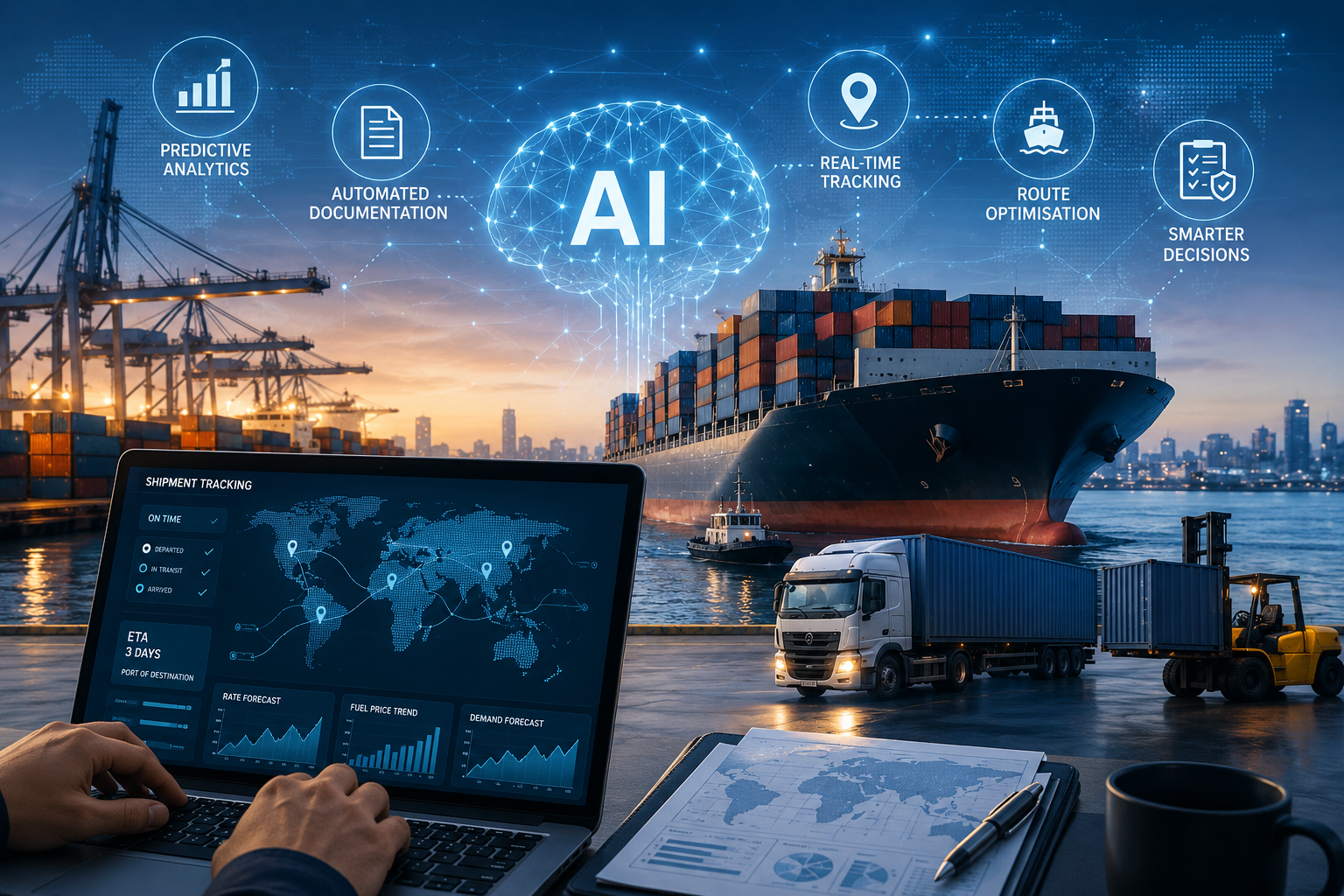
The global shipping industry isundergoing one of its most significant transformations in decades. AI and digitallogistics technologies are reshaping how sea freight is booked,tracked, managed, and optimised — and businesses that understand these changesare already gaining a meaningful edge in cost efficiency, shipment visibility,and supply chain resilience.
This guide explores how AI and digitallogistics are changing sea freight forwarding, what these changes mean inpractice for businesses shipping internationally, and answers the questions mostfrequently searched by companies evaluating how technology is reshaping thefreight industry.
AI and digital logistics refers to the use of artificial intelligence, machine learning,automation, and real-time data systems to improve the planning, execution, andmanagement of freight shipments. In sea freight specifically, this encompasseseverything from predictive rate forecasting and automated documentation toreal-time shipment tracking and intelligent route optimisation.
Rather than relying entirely on manualprocesses and human coordination across multiple parties — carriers, ports,customs authorities, and transport providers — AI-powered logistics systems canprocess and act on data at a speed and scale that manual workflows simplycannot match.
The result is a freight forwardinglandscape that is becoming faster, more transparent, more predictive, andsignificantly more efficient for businesses shipping cargo internationally.
One of the most immediate impacts ofdigital logistics is the shift from reactive tracking (finding out about delaysafter they happen) to proactive visibility (monitoring shipment status in realtime and receiving early alerts when issues arise). AI systems can aggregatedata from multiple carriers, ports, and transport providers simultaneously,giving businesses a single, live view of their cargo regardless of how manyparties are involved.
AI tools can analyse historical rate data,seasonal demand patterns, fuel price trends, and current carrier capacity toforecast freight rate movements — helping businesses time bookings morestrategically rather than simply accepting the current market rate.
Documentation errors remain one of theleading causes of customs delays and port hold-ups. AI-powered documentprocessing can check shipping documents — bills of lading, commercial invoices,customs declarations, and certificates of origin — for errors or missinginformation before submission, significantly reducing the risk of avoidabledelays.
AI systems evaluate multiple routingoptions simultaneously, factoring in transit times, carrier reliability,transshipment risks, port congestion, and cost — then recommend the mostefficient route for a given shipment. This goes well beyond what manual carriercomparison can practically achieve.
By integrating with broader supply chaindata, digital logistics platforms help businesses forecast shipping demand moreaccurately — enabling better inventory planning, more consistent shippingschedules, and reduced last-minute freight bookings that often come at apremium.
AI systems can monitor global portconditions, geopolitical developments, and weather disruptions in real time, alertingforwarders and shippers to potential issues before they escalate into costlydelays.
AI tools work best when built on gooddata. Start by reviewing your existing shipment history — routes, carriers,costs, transit times, and delay patterns — since this forms the foundation formore intelligent shipping decisions.
If your current process relies on manualcheck-ins or reactive delay notifications, look for a freight partner thatprovides real-time digital tracking as a baseline, not an add-on.
Identify where documentation errors ordelays currently occur in your shipping process, since this is one of thehighest-impact areas where AI-assisted checking delivers immediate, measurableresults.
Not all freight forwarders have investedequally in digital tools. Ask specifically about real-time tracking, automateddocumentation checks, rate forecasting, and how disruptions are flagged andcommunicated.
The most effective digital logisticssystems don't just manage individual shipments in isolation — they integratewith broader inventory and supply chain workflows, allowing shipping decisionsto be informed by upstream and downstream business data.
AI-driven logistics doesn't eliminatedisruptions — it makes responses faster and more informed. Ensure your freightstrategy includes contingency planning as well as efficiency tools, so thatwhen disruptions occur, your business can adapt quickly rather than scrambling.
Digital tools are most powerful whenbacked by experienced logistics professionals who understand the nuances ofspecific trade lanes, carrier relationships, and customs requirements.Technology augments expertise — it doesn't replace it.
This is the approach behind Fletching Logistics' sea freight forwarding service— combining carrier expertise and route knowledge with the visibility and datatools that modern international shippers need.
It's worth being clear about whattechnology doesn't fully replace in freight forwarding. Carrier relationships,local market knowledge, customs expertise, and the ability to resolve complex,multi-party issues still require experienced human judgment. The most effectivefreight forwarders use AI and digital tools to work faster and more accurately— not to eliminate the expertise that makes those tools useful.
Businesses evaluating freight partnersshould look for providers who combine genuine logistics experience with digitalcapability, rather than treating technology as a substitute for either.
1. What does AI and digital logisticsmean for sea freight forwarding? It refers to the useof AI, automation, and real-time data tools to improve how sea freight isbooked, tracked, documented, and routed — making the process faster, moreaccurate, and more transparent for businesses shipping internationally.
2. How does AI improve shipmenttracking in sea freight? AI aggregates live data fromcarriers, ports, and transport providers to give businesses real-timevisibility across their entire shipment journey, with proactive alerts whendelays or disruptions are detected.
3. Can AI reduce documentation errorsin sea freight? Yes. AI-powered document checking canreview shipping paperwork for errors or missing information before submission,significantly reducing the risk of customs delays caused by documentationissues.
4. Does AI in logistics make seafreight cheaper? Not automatically, but predictiverate forecasting, route optimisation, and smarter booking timing can reduceunnecessary costs — particularly for businesses that currently book reactivelyrather than strategically.
5. How does predictive freight rateforecasting work? AI tools analyse historical ratedata, carrier capacity, seasonal demand patterns, and fuel price trends toforecast rate movements, helping businesses time bookings morecost-effectively.
6. Will AI replace freight forwarders? Not entirely. While AI tools significantly improve speed, accuracy,and visibility, carrier relationships, local expertise, customs knowledge, andcomplex problem-solving still require experienced human logisticsprofessionals.
7. What should I look for in adigitally capable freight forwarder? Look forreal-time tracking, automated documentation processing, proactive disruptionalerts, route optimisation capability, and integration with broader supplychain workflows — alongside strong carrier relationships and route expertise.
8. How quickly is AI changing the seafreight industry? Adoption is acceleratingsignificantly, with major shipping lines, port operators, and freightforwarders all investing in AI and digital tools. Businesses that work withdigitally capable forwarders are already seeing the benefits in visibility,cost management, and disruption response.
AI and digital logistics are no longer a future prospect for the sea freight industry — they'realready reshaping how leading forwarders operate, how rates are forecasted, howcargo is tracked, and how disruptions are managed. For businesses shippinginternationally, the practical question isn't whether these technologiesmatter, but whether your freight partner is using them effectively on yourbehalf.
Fletching Logistics combines establishedcarrier partnerships and route expertise with the digital tools and real-timevisibility that modern international shippers need to stay ahead of afast-changing freight environment.
Want to know how smarter freightforwarding could benefit your shipments? Get intouch with our team to discuss your shipping needs.